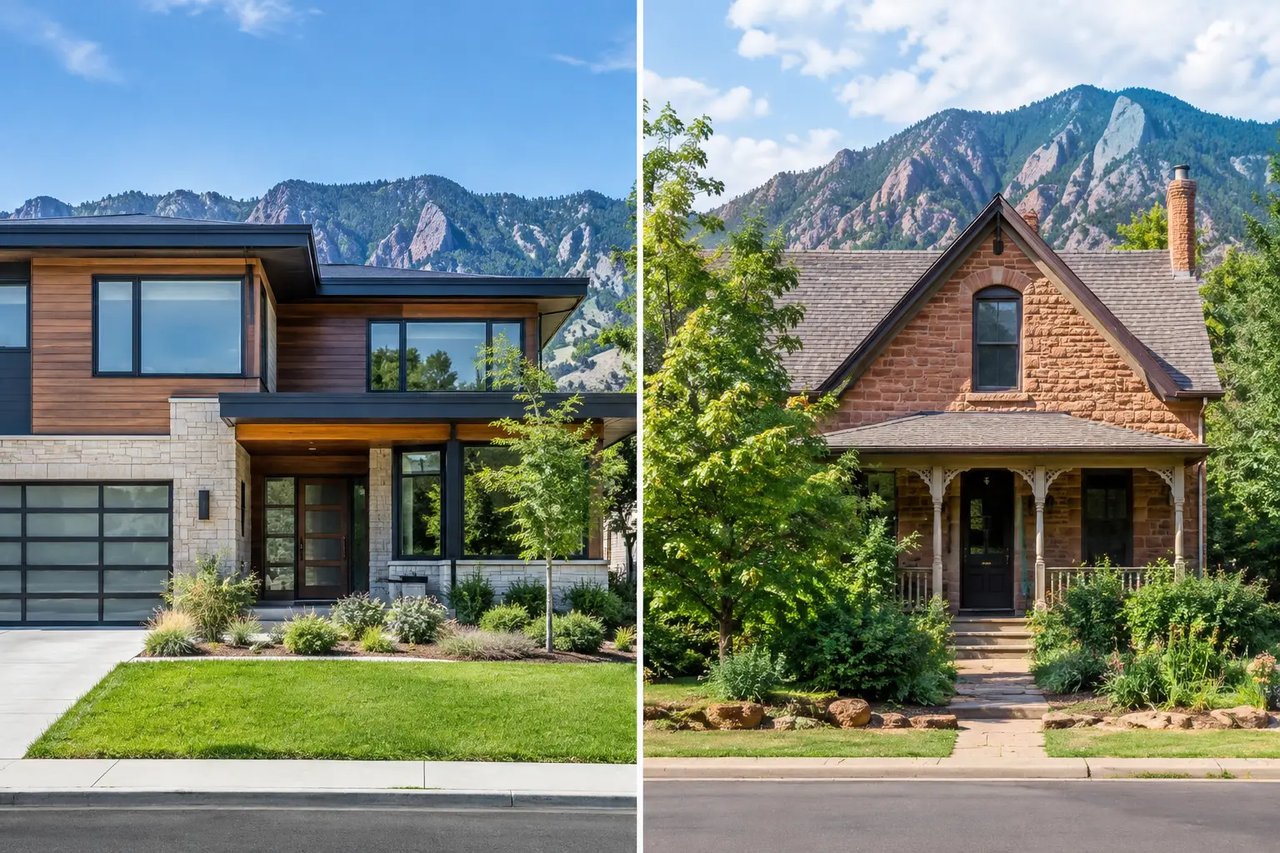
Two Craftsman bungalows sit a few doors apart on a Whittier block, both built in the neighborhood's original 1900s to 1940s wave, both on lots roughly the same width. One owner can submit ADU plans and get a building permit in about six weeks. The other is looking at an extra four to eight weeks and another $5,000 to $15,000 in design costs before anyone at the city even reviews the building permit itself. Same block, same zoning, same state law supposedly making this easy everywhere. The difference comes down to a single designation most buyers never think to ask about until they're already under contract.
That gap is the story right now, not the headline that Colorado made ADUs legal. Every Boulder homeowner has heard some version of that headline in the past year. What almost nobody explains is that the law was never built to reach a neighborhood like Whittier, and the reason why says more about what your money buys there than any median price does.
What the New Law Actually Promised
Colorado's HB24-1152 took effect statewide on June 30, 2025, requiring any city the state calls a "Subject Jurisdiction," Boulder included, to allow at least one accessory dwelling unit on every lot zoned for a single-family home. The law bars owner-occupancy mandates, ADU-specific minimum lot sizes, most parking requirements, and design standards stricter than what applies to the main house. Applications have to move through administrative review, not a public hearing.
Boulder didn't wait. City Council passed Ordinance 8650, effective March 8, 2025, which went further than the state floor by eliminating owner-occupancy, parking minimums, and minimum lot size citywide, ahead of the state's own deadline. Combined with an earlier change, Ordinance 8571 in September 2023, that removed a separate administrative pre-review step, a code-compliant Boulder ADU application now runs on roughly a six-week permit timeline with fees between $1,900 and $3,200.
That's the version of the story that applies almost everywhere in Boulder. It's also the version that skips the one thing that actually governs a Whittier project.
The Rule the Preemption Never Touched
Here's the mechanism worth understanding before you write an offer on an older Whittier home. HB24-1152 blocks cities from applying design standards to an ADU that are more restrictive than what applies to the primary dwelling. Boulder's historic preservation review isn't an ADU-specific rule. It's the same standard that has always applied to the whole property, main house included. Because it treats the ADU no differently than it treats the front porch, it falls outside what the new law was written to preempt.
In practice, that means any exterior change to a property that's individually landmarked or recognized as contributing to one of Boulder's historic districts still requires a Landmark Alteration Certificate from the city's Landmarks Board or preservation staff, a process layered on top of the standard building permit. And Whittier is one of the Boulder neighborhoods, along with Mapleton Hill and parts of North Boulder, where that review authority applies to a meaningful share of the housing stock.
There's a second layer that catches even more owners off guard. Under Boulder's own historic preservation rules, any home over 50 years old, whether or not it's ever been formally designated, can trigger a Historic Preservation Demolition Review if a permit application involves work that could constitute demolition or major structural alteration. Most of Whittier's original bungalow stock clears that 50-year threshold by decades, which means the review question isn't limited to houses with a landmark plaque. It can reach a garage conversion or a detached ADU footprint on a house nobody has ever called historic on paper.
Here's how the two tracks compare on paper:
| Standard lot | Landmarked or contributing lot | |
|---|---|---|
| Detached ADU size cap | 800 sq ft (market rate) | Up to 1,000 sq ft |
| Attached ADU size cap | 1,000 sq ft or 50% of primary, whichever is less | Up to 1,200 sq ft or 2/3 of primary, whichever is less |
| Review path | Administrative building permit only | Building permit plus Landmark Alteration Certificate |
| Added timeline | None beyond the standard ~6 weeks | Roughly 4 to 8 additional weeks |
| Added cost | Standard permit fees ($1,900 to $3,200) | Plus an estimated $5,000 to $15,000 in design adjustments |
Every detached ADU in Boulder, regardless of historic status, also needs an automatic fire sprinkler system on a dedicated bypass meter, typically another $8,000 to $15,000. That cost isn't a historic-district penalty. It's a citywide requirement that catches first-time ADU budgets by surprise on any lot.
The Trade That Actually Cuts Both Ways
What makes this more than a story about red tape is that Boulder built in a real trade for the slower process. A property that's an individual landmark, or recognized as contributing to a historic district, is eligible for a larger ADU envelope than a standard lot gets: up to 1,000 square feet detached instead of 800, and up to 1,200 square feet attached (or two-thirds of the primary home's size, whichever is smaller) instead of the standard 1,000. It's the same expanded size band the city offers owners who agree to rent-restrict a unit at 75 percent of area median income, just reached through historic status instead of an affordability commitment.
So the honest read isn't that historic Whittier lots got a worse deal. They got a different one: more calendar time and more design cost on the front end, a bigger legal ceiling on the back end.
Why the Bigger Ceiling Rarely Matters on a Whittier Lot
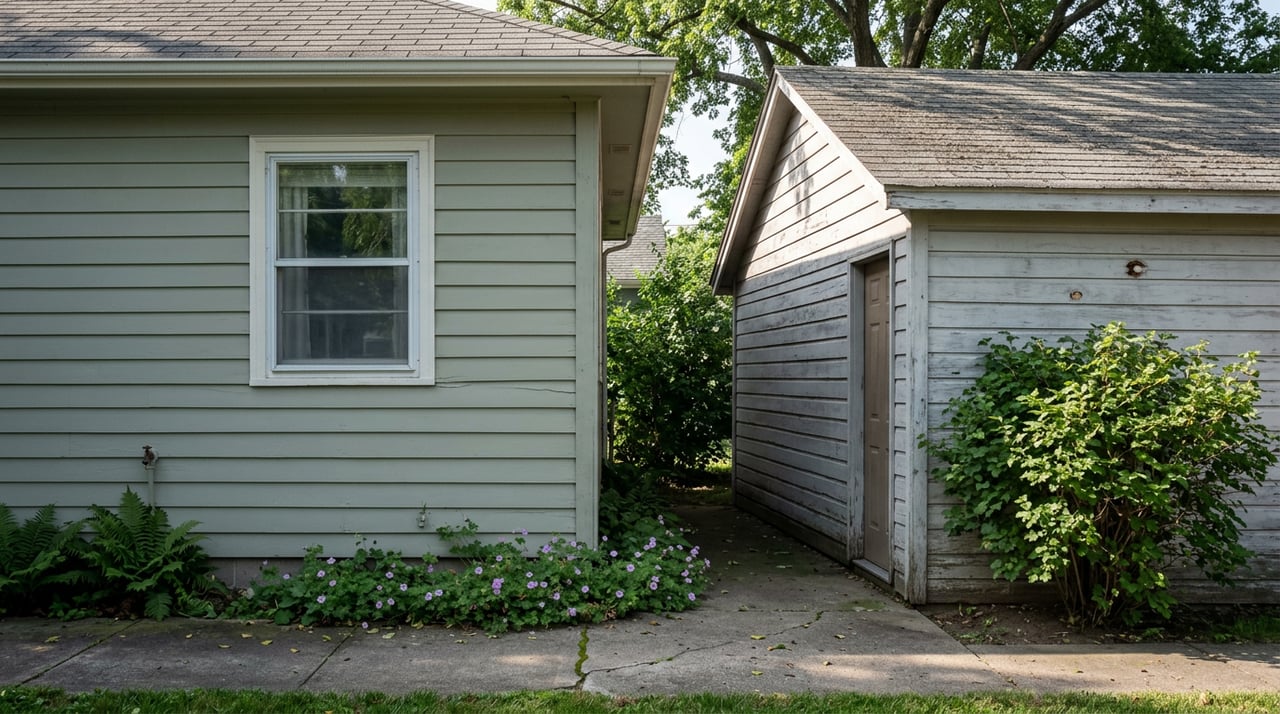
The catch is that the larger allowance assumes you have the lot to use it on. A typical Boulder lot in the 4,500 to 7,000 square foot range, which describes much of Whittier's original platting, supports a single-story detached ADU somewhere between roughly 245 and 800 square feet once setbacks, existing structures, and alley access are accounted for. On the smallest and narrowest of those lots, cost analyses of Boulder ADU projects describe the compact 245 square foot studio format as often the only realistic option, whether the property is landmarked or not.
That's the part the size-cap conversation usually skips. A contributing structure's owner may be legally entitled to build up to 1,000 square feet, but if the buildable envelope on their lot tops out at 400 square feet once the sprinkler line, setbacks, and the existing garage footprint are worked around, the extra 200 square feet of legal allowance never becomes a real 200 square feet of finished space. The historic designation bought them a bigger ceiling and a longer permit process, and the lot itself decided the ceiling didn't matter.
One more constraint worth knowing before you run any rental math: short-term rental use is effectively closed for new Boulder ADUs. Both the unit and the short-term rental license have to predate February 1, 2019, to qualify. Long-term rental is the only path for anything built under the current rules, which matters if the appeal of a Whittier ADU is walking distance to Pearl Street and weekend visitor traffic rather than a steady monthly tenant.
What This Means Before You Write an Offer
If ADU potential is part of why a Whittier property appeals to you, the sequence that protects you is simple: confirm the designation before you assume the timeline. Boulder maintains a public map of historic districts and individual landmarks that shows a property's status by address, and the city's Historic Preservation office will talk through what that status means for a specific parcel before you're locked into a contract. You can reach a Historic Preservation Planner directly at 303-441-1994 or [email protected].
A few questions worth asking before you assume either the fast track or the slow one:
- Is the structure individually landmarked, recognized as contributing to a district, or simply old enough (50-plus years) to trigger demolition review on qualifying work?
- What's the buildable envelope on the actual lot once setbacks and any existing garage or outbuilding are factored in, not just the code's maximum size?
- Does the project involve altering the existing structure, which is more likely to draw historic review, or a fully detached new build set back from the house?
Frequently Asked Questions
Does a historic designation affect the whole lot or just the main house? The Landmark Alteration Certificate requirement applies to exterior changes on the property generally, which is why an ADU sited on a contributing lot can trigger the same review process as a change to the historic structure itself, even though the ADU is new construction.
Can an HOA in Whittier block an ADU? HB24-1152 strips HOAs in Subject Jurisdictions, including Boulder, of the power to ban ADUs outright, though they can still enforce reasonable aesthetic standards like matching siding or roof pitch.
If my Whittier home isn't individually landmarked, am I in the clear? Not automatically. Any home over 50 years old can be pulled into Historic Preservation Demolition Review if the proposed work could constitute demolition or major structural change, regardless of whether the property carries a formal designation.
None of this is a reason to rule Whittier out if an ADU is part of your plan. It's a reason to price the timeline and the design review into your decision the same way you'd price a foundation inspection, before it becomes a surprise mid-transaction. Design decisions like ADU siting, materials, and how a new structure reads against a Craftsman original are exactly where a design-trained eye pays for itself early, catching what a standard walkthrough misses.
If you're weighing a Whittier property against another Boulder neighborhood and want the real math on what a specific lot supports, Debby Caplin combines Boulder neighborhood expertise with an interior design background to help you see both the paperwork and the potential clearly. Reach out for an instant home valuation and design consult before you write your next offer.