Walk down Pine Street on almost any afternoon and you'll eventually pass a stranger standing on the sidewalk with a phone raised toward a Victorian home that looks, from a polite distance, like every other well-kept Queen Anne on the block. They're not lost. They're paying respects to 1619 Pine Street, the house that played Mindy's apartment on the late-1970s sitcom Mork & Mindy, and they'll linger for exactly as long as it takes to get the shot before moving on.
A few blocks away, on Pearl Street, another yard used to draw its own quiet crowd every October. It doesn't anymore. Most people walking past today have no idea it was ever there, and that gap between what used to exist and what shows up when you search for it is the actual story of how a neighborhood's character gets edited, one parcel at a time.
Every Whittier Yard Used To Be A Little Bit Of A Billboard
Whittier is the neighborhood roughly bounded by Broadway on the west, 28th Street on the east, Alpine Avenue on the north, and Boulder Canyon Drive on the south, and it has spent a century being one of the most walkable pockets in the city. Whittier currently ranks third among Boulder neighborhoods for walkability, with a Walk Score of 86, meaning most errands here happen on foot rather than behind a windshield. That kind of density and foot traffic rewards a different kind of homeownership instinct: if people are going to walk past your house every day, your yard becomes part of the conversation whether you plan it that way or not.
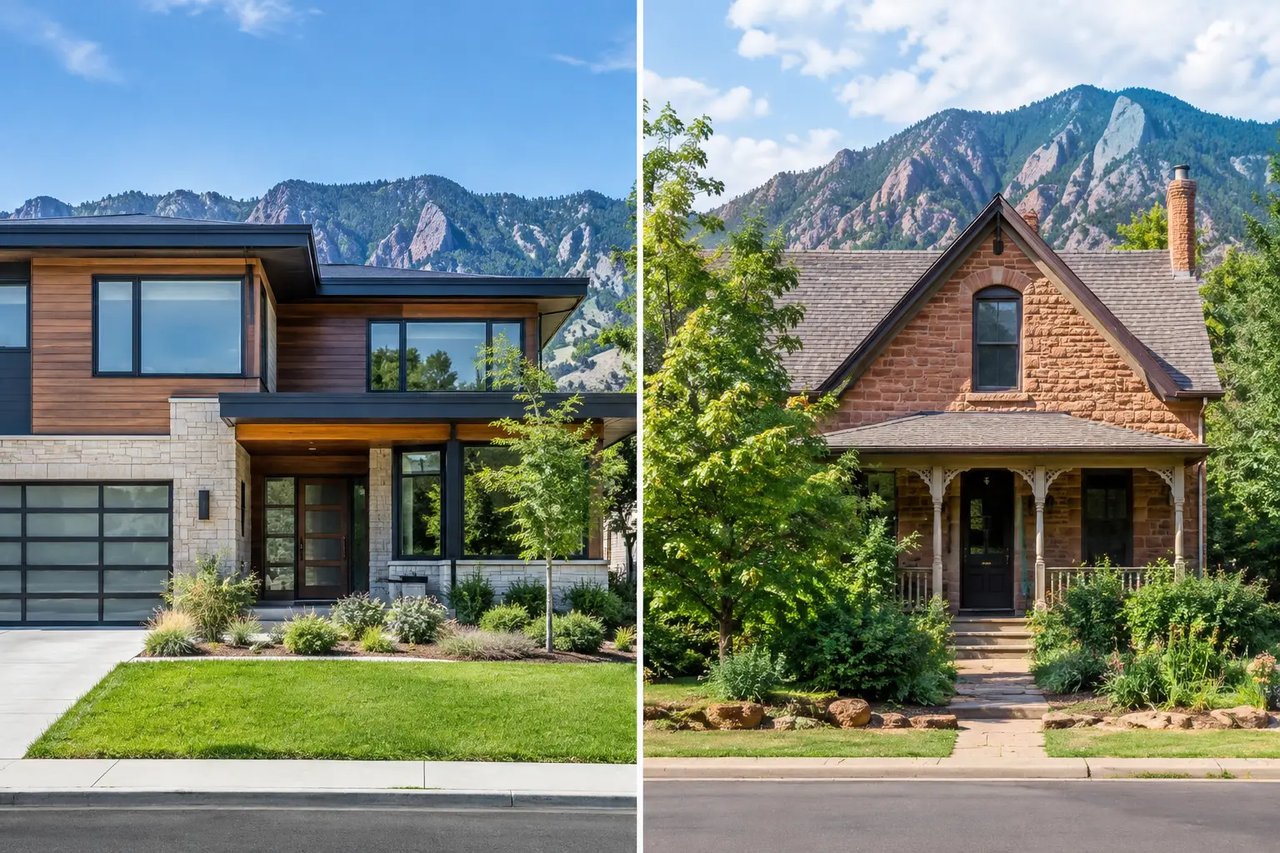
For decades, Whittier residents leaned into that. The neighborhood built a reputation for bungalows and Victorians with eccentric front yards, homes where owners used sculpture, seasonal displays, and general yard theater to say something to the sidewalk. The Mork & Mindy house is the most famous surviving example, a private residence built as a Queen Anne around 1883 that still stands with its original iron-turned-white-picket charm even though the actual show never filmed a single interior scene there. It's not for sale, nobody can go inside, and the current owners simply tolerate the occasional selfie from the sidewalk. That's the whole arrangement, and it has held for close to fifty years.
The Haunt That Went Quiet
The Pearl Street Haunt, at 1836 Pearl Street, was a different kind of yard institution. For years it ran as a resident-built haunted display, elaborate enough that people walking home from downtown late at night would get genuinely spooked by a staged open grave and propped-up casket in someone's front yard. It wasn't a seasonal pop-up so much as a neighborhood fixture, the kind of thing regulars built into their October routine without thinking twice about it.
It's gone now. According to a firsthand account from a longtime observer, the lot next door was purchased and redeveloped into a condominium building, and that construction ended the display for good. If you search for the Pearl Street Haunt today, you'll still find a Yelp listing with operating hours dating back to 2012, an artifact of a business that no longer exists at that address. The internet remembers it. The block does not.
Why One Yard Survived And The Other Didn't
Fame had nothing to do with which one lasted. The Mork & Mindy house isn't protected by any historic landmark designation tied to the TV show, and the Haunt wasn't any less beloved than the Victorian on Pine Street. The difference came down to something much less romantic: what happened to the parcel next door.
The Pine Street house sits on its own lot with enough surrounding space that nothing about the adjacent property has forced a change to what's visible from the street. The Haunt depended on more than its own yard. It needed sightlines, an approach, a bit of theatrical distance that only worked because the lot beside it hadn't been built out yet. Once that lot got developed, the stage disappeared even though the house itself never changed hands.
That's worth sitting with if you live in Whittier, because it means the neighborhood's texture isn't really made of the houses everyone already knows how to point out. It's made of dozens of smaller, quieter yard decisions that are only as durable as the empty space next to them. A quirky yard doesn't get grandfathered in. It just keeps existing until the parcel beside it doesn't.
What's Still Making Noise Right Now
Not everything is disappearing. Whittier still has plenty of places that do the daily work of neighborhood life without needing a plaque or a Halloween display to matter.
- Greenleaf Park, on Spruce Street, still hosts pickup basketball on any evening warm enough for it.
- Emma Gomez Martinez Park sits along the Boulder Creek path, the kind of park that gets used for a bike ride rather than a destination trip.
- The Pearl Street East End cluster of cafes, including Ozo Coffee and Boxcar Coffee Roasters, still anchors the slower, more local end of Pearl before it turns into the tourist-heavy blocks closer to downtown.
- The red-brick building that houses Whittier Elementary has stood on its corner since 1882, one of the oldest school structures still standing in the city, and it's part of what makes the streets around it feel older than most of Boulder.
None of these are going anywhere soon. But none of them were guaranteed to be here either, which is sort of the point.
Keep Watching Your Own Block
The next yard that goes quiet in Whittier won't send out a notice first. It'll just be a for-sale sign next door, then a dumpster, then a different view from your kitchen window. The neighborhood doesn't lose its character all at once. It loses it in single transactions that most people don't connect to anything until years later, when they try to describe the block to someone and realize the detail they were about to mention isn't there anymore.
If you've noticed a shift on your own street, a lot that changed hands, a yard that quietly stopped doing what it used to do, that instinct is worth paying attention to. It's usually the first sign of something bigger happening around you. Debby Caplin has spent years tracking exactly these small shifts across Whittier and the rest of central Boulder, the kind of block-by-block detail that doesn't show up in a search result but changes what it's actually like to live here. If you're curious what's changing near you, or just want to talk through what you've been noticing, that's a conversation worth having before the next lot changes hands.