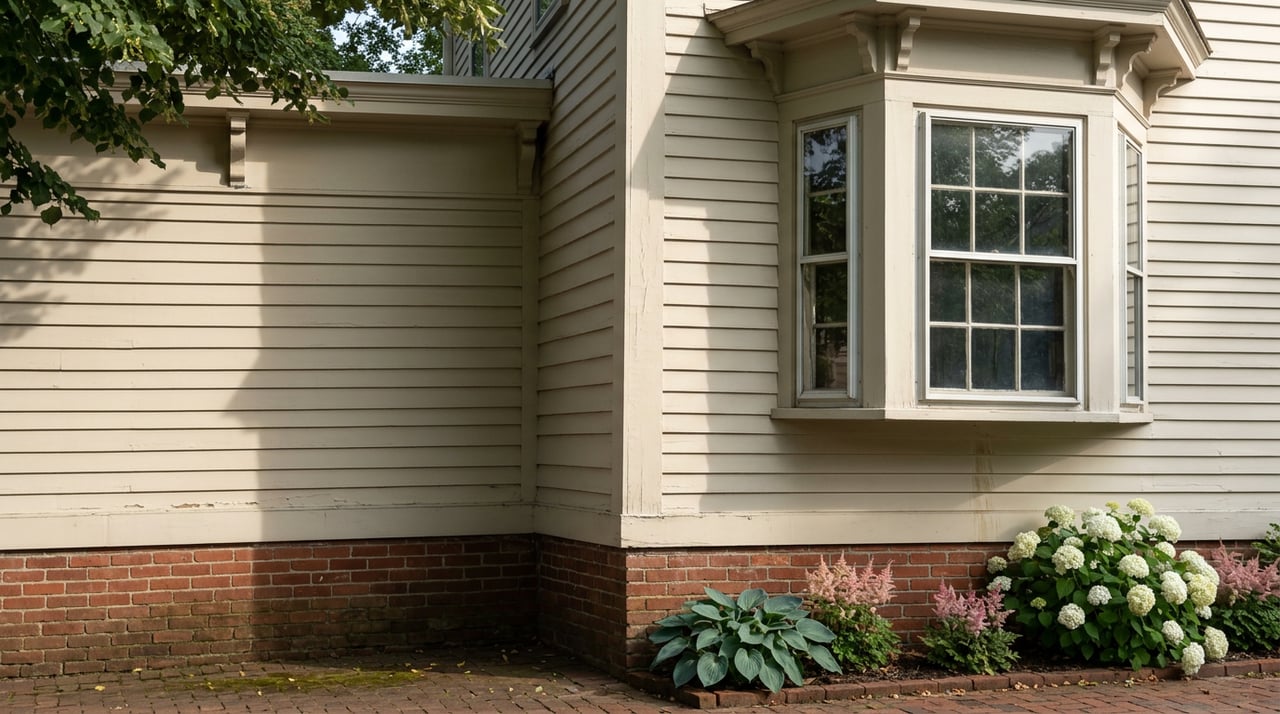
Two houses came before Boulder's Landmarks Board in the same window of time, both inside the Mapleton Hill Historic District. One, at 2130 11th Street, needed a continuation hearing just to swap three windows and reshape a front dormer. The other, at 432 Concord Avenue, sailed through with approval to tear down a 1990s accessory building and put up a new two-car garage.
Same district. Same ordinance. Wildly different outcomes. The reason has nothing to do with price, size, or how charming the porch looks in listing photos. It comes down to a single designation buried in city records: whether the property is marked "contributing" or "non-contributing" to the historic district. Most buyers never think to ask. It is one of the first things worth checking before you fall for a Mapleton Hill listing.
The Designation That Doesn't Show Up in the MLS Description
Mapleton Hill is Boulder's third and largest historic district, adopted under the city's Historic Preservation Ordinance of 1974. Inside the district boundary, every property gets sorted into one of two buckets. A "contributing" property is one the Landmarks Board has determined adds to the historic character of the district, usually because of its age, architecture, or intact original features. A "non-contributing" property sits inside the same boundary lines but doesn't carry that designation, often because it was built more recently or altered enough over the decades that it no longer reads as historic.
The City of Boulder requires a Landmark Alteration Certificate for any exterior change to either type. That part of the rule is the same for everyone. But what a contributing designation actually asks of an owner, and what it offers in return, is where the two paths split.
Simple, pre-approved work like repainting in an approved color can often clear through administrative staff review within days. Anything bigger, an addition, a significant alteration, a demolition, moves to a full hearing before the Landmarks Board, and that's where contributing status starts to matter. The board leans on the Secretary of the Interior's Standards for Rehabilitation, which push toward repairing original materials rather than replacing them. Window rehabilitation over replacement is the standard example, and properly restored historic windows can perform close to new Energy Star models without losing the original glass and profile.
What That Looked Like on Real Mapleton Hill Streets
The 2130 11th Street case is a good illustration of what "contributing" means in practice. The project was straightforward on paper: remove three historic windows, modify the opening, and install four windows in a front dormer. Because the house carries contributing status, the application went to a public hearing and then needed a continuation, meaning it wasn't resolved in a single meeting.
At 814 Pine Street, a homeowner's request to replace a non-historic door and restore original wood windows with wood storm windows moved through the same board process, the kind of project the Secretary of the Interior's Standards are built to encourage: repair and reuse over replacement.
Then there's 429 Highland Avenue, where a project first reviewed by the Landmarks Board in November 2022 was still coming back for condition reviews through the Landmarks Design Review Committee in late 2023 and again into 2024. That's not a quick turnaround. If you're a buyer who wants to close, then start construction the following spring, a contributing property with a substantial scope of work can turn into a multi-year timeline before a shovel goes in the ground.
Compare that to 432 Concord Avenue, a non-contributing property inside the same district. The owners got approval to demolish an existing accessory building and construct a new one-and-a-half story, two-car garage, plus remodel the house itself. It's a bigger physical change than a dormer window swap, and it moved through the process with less friction, because the property doesn't carry the character-preservation weight that comes with contributing status.
The Trade-Off Nobody Puts on the Listing Sheet
Here's the part that changes the calculation for buyers: contributing status isn't only a cost. Colorado offers a 20 percent state income tax credit on qualified rehabilitation costs for local landmarks and for contributing buildings within local historic districts. The credit is capped at $50,000 per property and can be spread across a 10-year period, and it's a direct credit against tax owed, not a deduction, so it reduces your Colorado tax bill dollar for dollar.
That credit is only available to contributing and individually landmarked properties. A non-contributing property inside the same Mapleton Hill boundary doesn't qualify, no matter how much money goes into it. So the trade runs both directions. Buy a contributing home and you'll spend more time in front of the Landmarks Board and more care sourcing historically appropriate materials, but a serious rehabilitation project can come with a meaningful state tax offset. Buy a non-contributing home in the same district and you're renovating without that financial cushion.
Here's how the two paths actually compare:
| Contributing Property | Non-Contributing Property | |
|---|---|---|
| Exterior change review | Landmark Alteration Certificate required; often escalates to a full Landmarks Board hearing for anything beyond minor work | Landmark Alteration Certificate still required, but more likely to clear through staff-level administrative review |
| Materials expectation | Character-defining features and materials generally must be preserved or restored | |
| Colorado state tax credit | Eligible: 20% of qualified rehab costs, capped at $50,000, spreadable over 10 years | Not eligible |
| Real example | 2130 11th St: dormer window project needed a continuation hearing | 432 Concord Ave: accessory building demolition and new garage approved |
How to Check Before You Write an Offer
None of this shows up automatically on a listing sheet. The city maintains a searchable Historic Property/Landmark Search where you can look up an address by parcel number, landmark name, or construction date to see its designation status before you get attached to a floor plan. It's worth doing that search the same afternoon you tour a Mapleton Hill property, not after you're already under contract.
If you're working with a seller's agent, ask directly whether the property is contributing or non-contributing, and ask whether there are any open or recently resolved Landmark Alteration Certificate cases tied to the address. An unresolved case, like the multi-year 429 Highland Avenue review, is worth asking about before closing. That's a disclosure conversation worth having before closing, not after.
For sellers, understanding your own property's status changes how you talk about renovation potential. A contributing home with an intact original facade is a different pitch to a design-conscious buyer than a non-contributing home where a rear addition or new garage is realistically on the table. Either story can be a strong one. It just needs to be the accurate one.
Frequently Asked Questions
Does contributing status affect resale value in Mapleton Hill? The research behind this piece doesn't include current appraisal data on that specific question, so it's not something to state as fact. What is clear is that contributing status changes the scope and timeline of what a future owner can do to the exterior, which is a real factor for any buyer weighing renovation plans against a purchase price.
Can a non-contributing property in Mapleton Hill ever become contributing, or vice versa? Designation status is set by the Landmarks Board as part of the district's records, and changes to a property's boundary or status designation go through the city's formal review process rather than being something an owner can request informally.
Is interior work regulated the same way as exterior work? The Landmark Alteration Certificate process applies to exterior changes, from paint color to additions to demolition.
Mapleton Hill rewards buyers who do their homework before they fall in love with a facade. If you're weighing a purchase here, or trying to figure out what your own contributing or non-contributing status actually means for a future renovation, Debby Caplin pairs her interior-design background with hands-on Boulder market knowledge to help you read a listing the right way the first time. Get your instant home valuation and design consult to start the conversation.
This article is general information, not legal, tax or financial advice. Consult a qualified professional about your situation.