Walk down Mapleton Avenue on the morning of August 29 and you will find folding tables in half the driveways on the block, neighbors pricing old skis and kids' bikes, and foot traffic moving at the unhurried pace of people who have nowhere else to be. Three weeks later, on September 20, those same porches will hold amplifiers, folding chairs, and forty-plus bands playing for tips instead of a paycheck. Neither event has a sponsor. Neither has a gate. Both are run entirely by the people who live here.
Mapleton Hill's calendar differs from the one two blocks south on Pearl Street, where the summer's biggest draws (Bands on the Bricks, the Pearl Street Arts Fest, the Frequent Flyers Aerial Dance Festival wrapping up this week) are organized by downtown business associations, city programming, or a professional dance company selling tickets to a show. Mapleton Hill's two marquee dates are organized by a volunteer committee and staged on private property. Together, they give residents two different ways to take part in neighborhood life.
Two Dates, Neighborhood-Run
The Mapleton Hill Rummage Sale returns Saturday, August 29, billed by its organizers as a neighborhood-wide tradition built for walking and biking through the district's century-old tree-lined streets. There is no central checkout, no city permit booth, no admission. You bring cash, you knock on doors that have a table out front, and you leave with someone else's lamp.
The Mapleton Hill PorchFest follows on Sunday, September 20, in its latest edition. The structure hasn't changed much since it started in 2011:
- Noon to 4 p.m., three sets of music spread across the historic district
- Food trucks stage at 4th and Mapleton, the spot longtime residents call the Academy
- A kickoff concert and a KGNU livestream anchor the day
- Bands play acoustically by request, to keep the whole event walkable without amps drowning each other out
- Nobody gets paid. Tip buckets sit on every porch, and hosts are asked to bring their own power cords if they need electricity
For context, the table compares these neighborhood events with other events on Boulder's summer calendar.
| Event | Who runs it | Where | Cost to attend |
|---|---|---|---|
| Mapleton Hill Rummage Sale (Aug 29) | Neighborhood volunteers | Private driveways and yards | Free to browse |
| Mapleton Hill PorchFest (Sept 20) | All-volunteer neighborhood committee | Private porches, 4th & Mapleton food trucks | Free, tip the band |
| Colorado Brazil Fest (Aug 6-8) | City-programmed | Boulder's Bandshell | Public event, city venue |
| Frequent Flyers Aerial Dance Festival (through Aug 7) | Frequent Flyers | Multiple Boulder venues | Ticketed classes and shows |
Downtown's calendar runs through institutions. Mapleton Hill's runs through the people who already live there, using their own front yards as the infrastructure.
Why the Porches Are Doing the Work
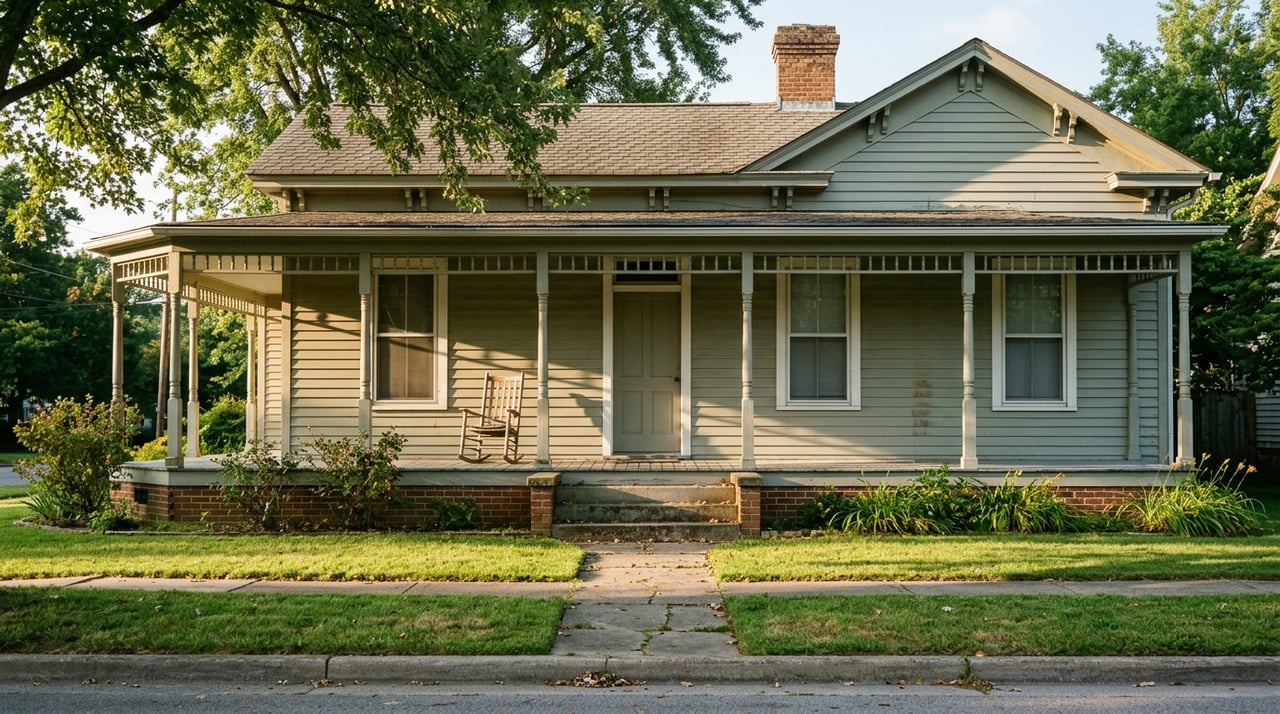
That structure only works because of the way the neighborhood was actually built, not because of some particular civic-mindedness that other Boulder neighborhoods lack. Mapleton Hill's homes date mostly from the late 19th and early 20th centuries, set close enough together on their lots that a porch conversation on one block carries to the sidewalk in front of the next house. The tree-lined streets that show up in nearly every description of the neighborhood are doing double duty here, shading the whole PorchFest route and keeping the walk between houses short enough to cover on foot in an afternoon. You cannot run a forty-band walking festival in a neighborhood of long setbacks and attached garages facing the street. You need porches people actually sit on, sidewalks people actually use, and blocks short enough that four hours covers the whole route on foot.
The rummage sale depends on the same geometry. A sale that spans dozens of participating houses only works if a shopper can cover the ground in an afternoon without a car. Mapleton Hill's grid, laid out before anyone was thinking about cul-de-sacs, does that by default.
This is worth sitting with if you are trying to understand what actually makes the neighborhood function day to day. The charm everyone mentions, the porches and the old trees, is not decoration on top of the neighborhood's daily life. It is the load-bearing structure underneath two of its biggest annual events.
The Trail Behind the Trailhead
The Sanitas Valley Trailhead sits at the northwest edge of Mapleton Hill and functions as the neighborhood's direct entry point to Mount Sanitas, one of the most heavily used pieces of open space in the city. The city's Open Space and Mountain Parks department is in the middle of a multi-year restoration project on the mountain, backed by a $1.1 million grant from the Land and Water Conservation Fund, and the project page is clear that no full closures are expected on the main Mount Sanitas Trail itself, though intermittent delays and detours are possible while crews work.
That does not mean every trail in the area is open. As of this writing, the Red Rocks Trail and Red Rocks Spur are both closed until further notice, according to state trail data. If your usual loop out of Mapleton Hill dips into Red Rocks, plan on rerouting through Sanitas Valley or the main Mount Sanitas Trail instead. It's a small thing, but it's the kind of small thing that only matters if you actually live close enough to walk there before work, which most of Mapleton Hill does.
The Walk in Between
None of this happens in isolation from the rest of daily life on the hill. Salvaggio's Deli sits at the Mapleton end of Pearl Street, still the neighborhood's go-to for fresh bread and a sandwich on the way back from a Sanitas hike. Ideal Market, at the corner of Broadway and Alpine, covers the natural foods and prepared-food end of things, close enough to be a genuine walking errand rather than a drive. Whittier International Elementary sits on the neighborhood's periphery, one of the oldest continuously operating schools in Boulder, and families who send kids there tend to know each other well before rummage sale season rolls around.
None of these are new additions. That's part of the point. The neighborhood's day-to-day rhythm doesn't depend on turnover or new openings the way a commercial strip does. It depends on the same small set of walkable anchors doing the same job year after year, which is exactly the kind of continuity that makes a volunteer-run rummage sale or a forty-band porch festival possible in the first place. You can't organize an unpaid, all-volunteer neighborhood event around people who don't know their neighbors. Mapleton Hill's calendar works because its daily life already does.
What This Means If You're Watching From the Porch
If you live on Mapleton Hill, the practical takeaway is simple: mark August 29 and September 20, and if your regular hike loops through Red Rocks, check the closure before you lace up. But the bigger thing worth noticing is what these two dates say about the neighborhood you're already in. The events are built out of what the neighborhood already has: porches close enough to hear each other from, blocks short enough to walk in an afternoon, and neighbors who've done this enough times to know exactly how it works.
Curious what else is worth knowing about Mapleton Hill, whether you're settled in for the long haul or just starting to pay attention to the neighborhood around you? Debby Caplin covers this stretch of Boulder in detail, porches and property lines both. Get your instant home valuation and design consult whenever you're ready to talk specifics.